From blind spots to customer intelligence.
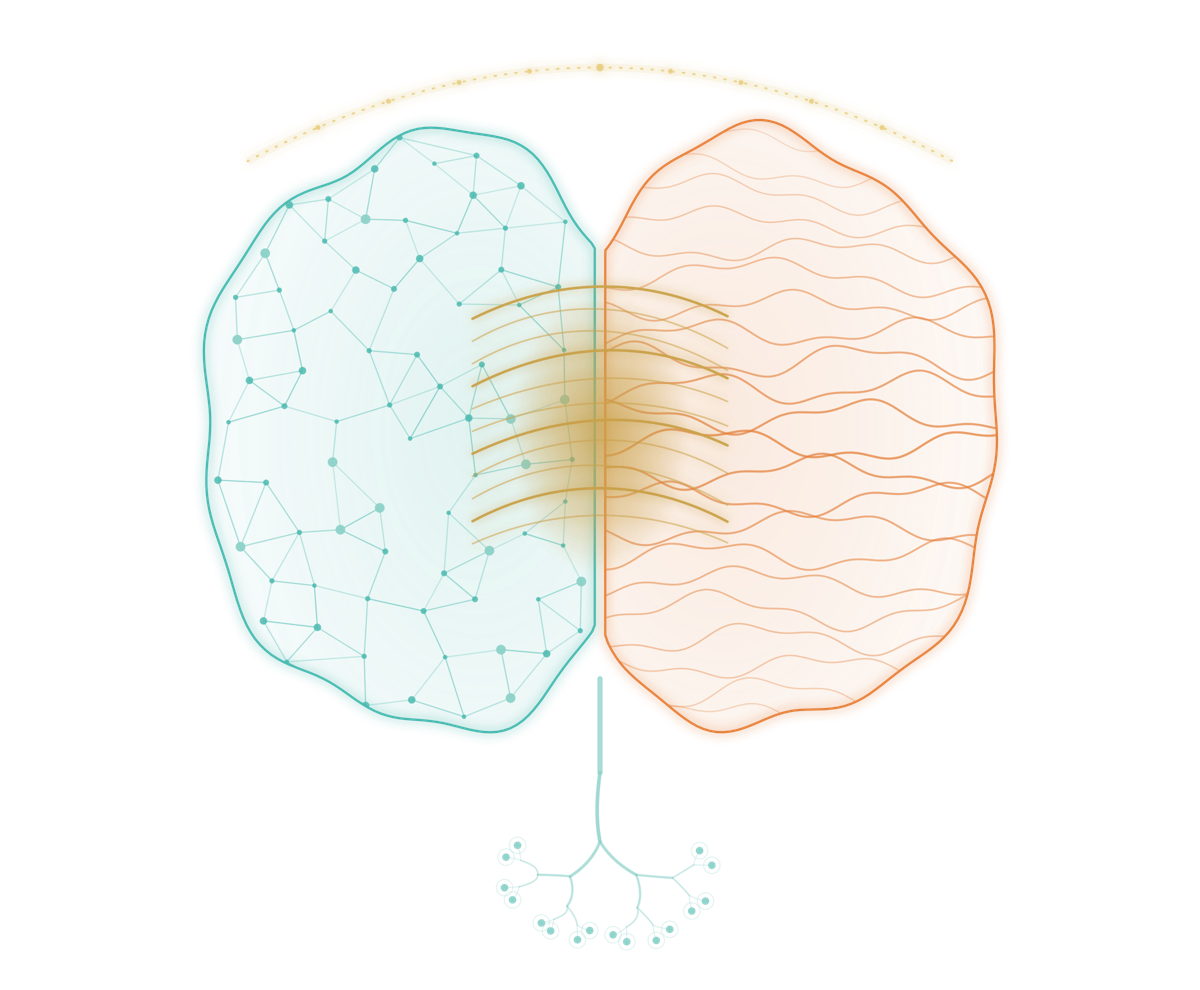
Most companies run on half a brain. The CRM team knows the customer, the experience team feels the customer, and the two rarely meet in the same decision. The Customer Shift™ connects them, so your organisation can know, feel and act on its customers as one.
By Dr. Hakan Tetik35+ years in strategy and transformation250,000+ programme participants
Customer-centric on the slide. Product-centric in the meeting room.
Every strategy deck says “customer first”. Then the CRM team optimises campaigns, the experience team maps journeys, and the board reviews revenue. Each part is busy. None of them sees the whole customer.
of consumers expect companies to deliver personalised interactions.
McKinsey & Company, “The value of getting personalization right—or wrong—is multiplying”, 2021.get frustrated when that doesn’t happen. Customers judge the CRM investment with their feelings.
McKinsey & Company, 2021.of executives name lack of organisational adoption as the top reason transformations fail. Technology comes last, at 9%.
Merkle & Adobe, The Case for Change, 2016 (250 US senior executives).The problem is rarely the tool. It is a company brain that isn’t connected.
Think of your company as a brain.
Five layers decide whether an organisation is customer-intelligent. Select a layer to see where it sits.
Without CEM, CRM is cold.Without CRM, CEM is blind.
Where is your company today?
Plot how well you know your customers against how well you feel them, and four profiles appear. Each one needs a different first move.
Feels the customer, can’t measure it. Beautiful moments that can’t be proven or scaled.
Knows and feels the customer. Designs the right moment for the right person, and proves the value.
Neither knows nor feels the customer. Competes on price and campaigns.
Knows the customer, doesn’t feel them. The right person at the right time, with a cold message.
Five steps from blind spots to customer intelligence.
The Customer Shift™ is a five-step customer-centric transformation method that moves an organisation from its blind spots to customer intelligence.
Make the disconnect visible
Surface the blind spots and broken handovers between what you know and what customers feel.
Build the nervous system
Set up listening posts and one customer view that every touchpoint can use.
Let CRM and CEM meet
Read value and emotion in the same table, for the same customers.
Build the bridge
Design the closed loop and the critical moments, then prove them in a 90-day pilot.
Make it last
Align incentives, rhythm and governance so customer intelligence becomes how you work.
How customer-intelligent is your company?
- Your Customer Intelligence Index (0–100) and maturity level
- Your quadrant on the 2×2 and a living picture of your company brain
- Scores for all five layers, with the breaking points
- Three moves for your first 90 days
Team mode. Ask your CRM team and your customer experience team to take it separately. The gap between their answers shows how broken the bridge is.
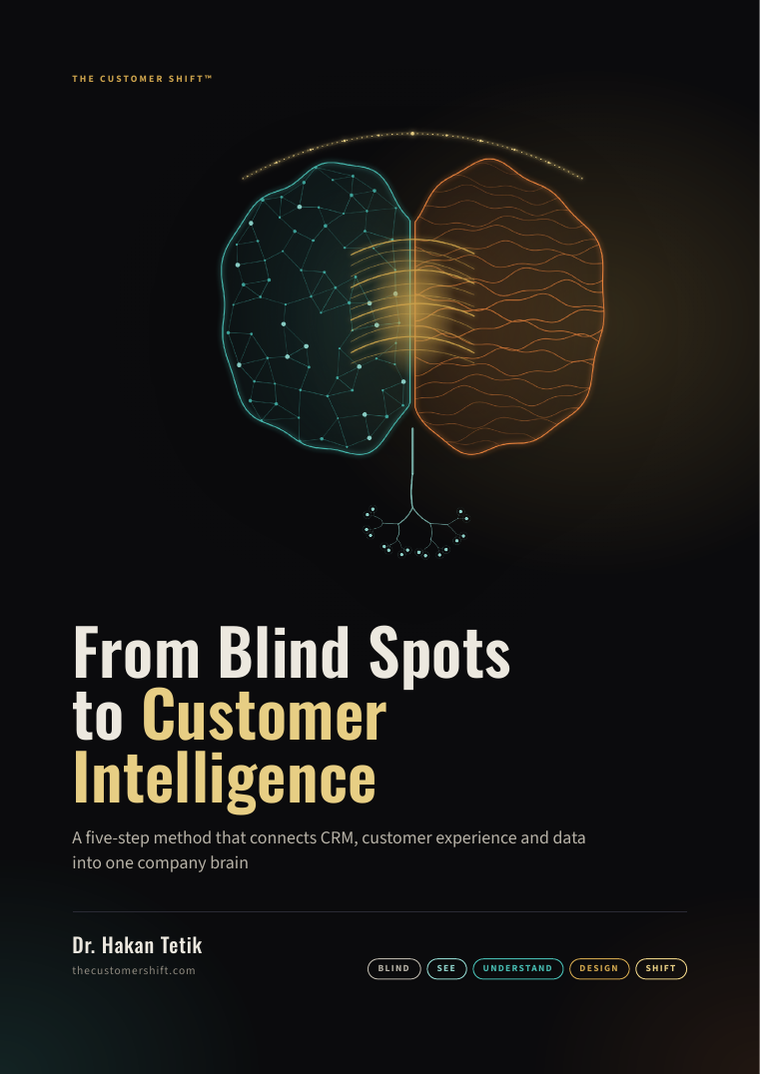
The Customer Shift™: From Blind Spots to Customer Intelligence
The full method in one practical read: the company brain, the four profiles, the five steps, a scorecard and a 90-day starter plan.
- Why transformations stall and what the evidence says
- The company brain, layer by layer
- Four profiles and the first moves for each
- Five steps with questions, outputs and pitfalls
- A customer intelligence scorecard
- A 90-day starter plan and a quick self-check
Bring The Customer Shift™ to your organisation.
From a keynote that changes the conversation to a programme that changes the operating model.
Right Brain × Left Brain
For leadership summits and conferences. Why customer-centricity stalls, and how the company brain fixes it.
- The say–do gap, with evidence
- The company brain and the four profiles
- Live diagnostic with the audience
The Customer Shift™ Workshop
For leadership and cross-functional teams that need one language and one priority list.
- Team diagnostic: CRM vs CX view
- Blind-spot map
- Three priority journeys and a 90-day plan
Transformation Programme
For organisations ready to move from intent to an operating model, with measurable value.
- Maturity baseline and blind-spot map
- Closed loop and redesigned moments
- Scorecard, incentives, internal academy
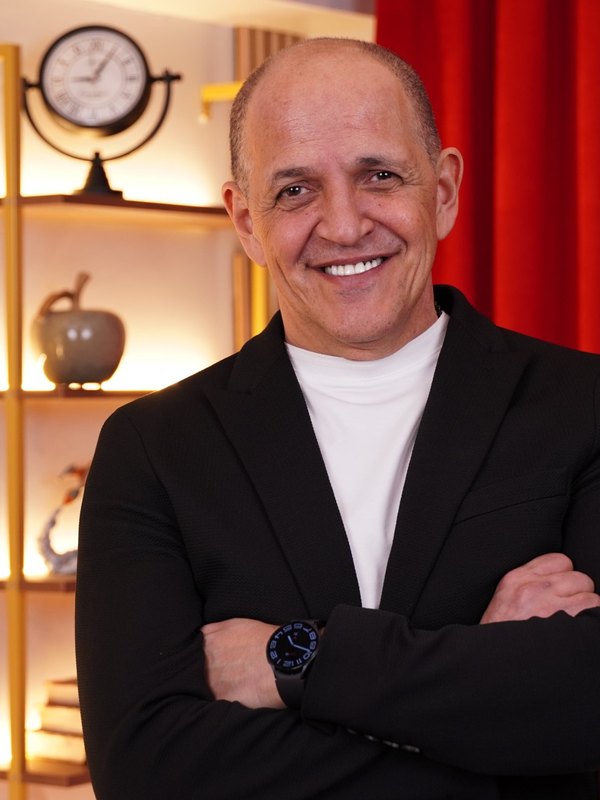
Dr. Hakan Tetik
Transformation architect · framework designer · speaker · author
Hakan is a PhD engineer with more than 35 years at the intersection of strategy, culture, customer centricity, product management and leadership. More than 250,000 people have taken part in his programmes, from Turkey’s leading corporations to international programmes across the GCC, the Middle East and Eastern Europe.
He has a long-standing affiliation with Koç University’s Executive Development Center and uses AI in all of his workshops and programmes. The Customer Shift™ brings his work on CRM, customer experience, data and culture together into one method.
“Strategy is not a plan. It is a strategic execution system.”
- Strategic thinking
- Customer experience
- Product management
- Leadership in the age of AI
- Cultural transformation